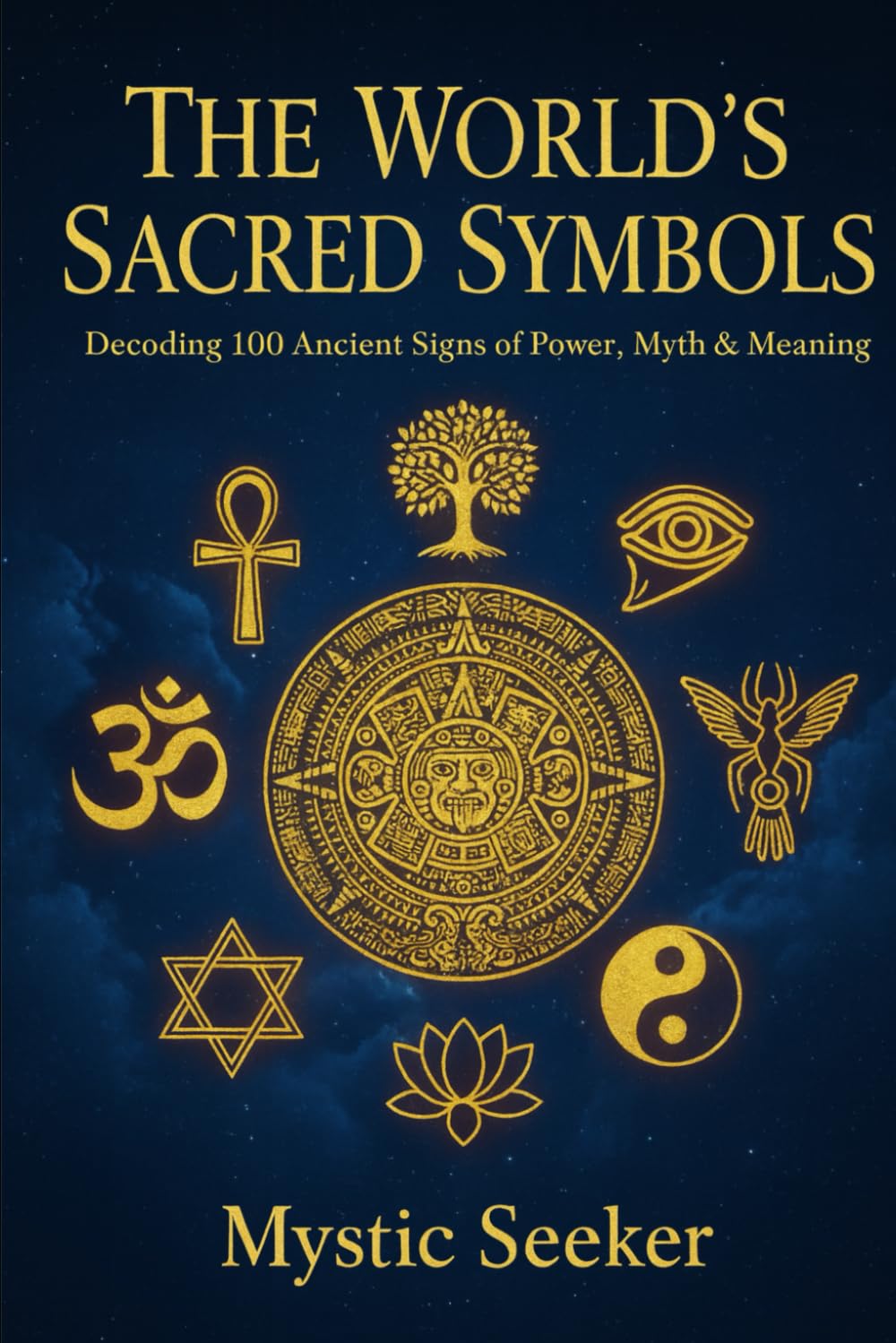
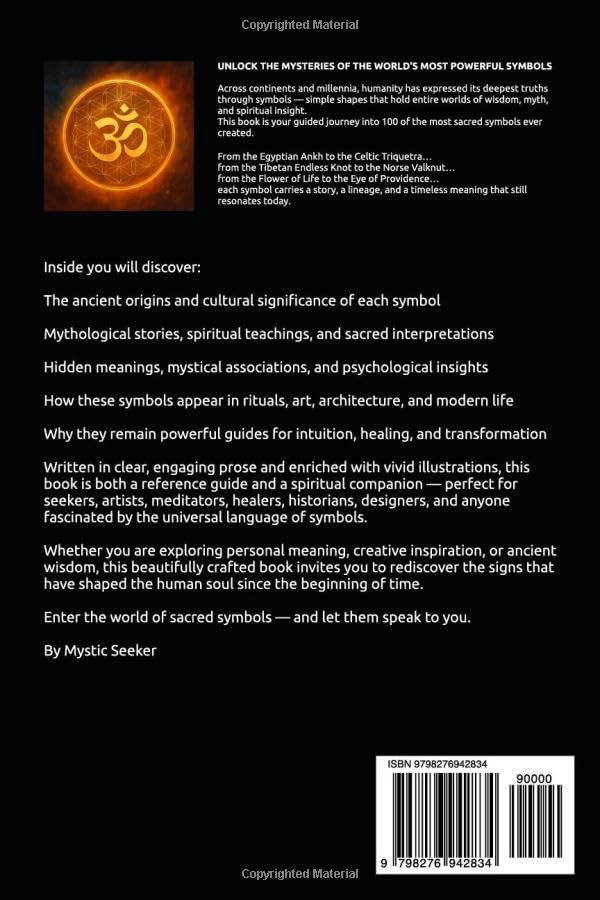
The World's Sacred Symbols: Decoding 100 Ancient Signs of Power, Myth & Meaning
Symbols & Archetypes
This is the broad gateway volume for readers who want to understand how symbols carry memory, myth, spiritual intuition, and cross-cultural meaning.
This is the broad gateway volume for readers who want to understand how symbols carry memory, myth, spiritual intuition, and cross-cultural meaning. The World's Sacred Symbols
Author note
"This book helps readers explore: - How symbols function across myth, ritual, art, and spiritual practice. - Why certain images keep reappearing across very different cultures. - How to read sacred forms as a language rather than decoration."
Sample Reader
Read the opening pages before you commit
PREFACE * * * Symbols are among humanity's oldest tools for storing meaning. Long before most people could read a written text, communities read the world through forms: the loop, the spiral, the cross, the wheel, the knot, the serpent, the tree. A symbol c...
6 sample pages
Approx. 14 min read
Ebook pages 4-12
Opening sample
Enter the reader before you commit to the book
PREFACE * * * Symbols are among humanity's oldest tools for storing meaning. Long before most people could read a written text, communities read the world through forms: the loop, the spiral, the cross, the wheel, the knot, the serpent, the tree. A symbol c...
Reader
Excerpt 1 of 6
Ebook page 4
PREFACE
* * *
Symbols are among humanity's oldest tools for storing meaning. Long before most people could read a written text, communities read the world through forms: the loop, the spiral, the cross, the wheel, the knot, the serpent, the tree. A symbol could carry theology, memory, protection, identity, and beauty all at once. That is why symbols endure. They are compact, memorable, and powerful enough to survive when languages shift and empires disappear.
This book was written to help modern readers recover that symbolic literacy. Many of the signs gathered here are still with us on jewelry, architecture, tattoos, ritual objects, flags, altars, and works of art. But familiarity often hides meaning. We recognize the image without understanding the world that produced it. The goal of this book is to reopen that world.
Across these pages, you will move through ancient Egypt, India, Tibet, East Asia, Indigenous traditions, Africa, the Abrahamic world, and the esoteric currents of the West. Some symbols belong to living faiths. Others survive through archaeology, myth, or folklore. Some are shared across traditions, while others are specific to a single people or ritual context. Each one deserves to be approached with curiosity and care.
This is a guide for readers, not a final authority over every tradition. It is meant to be clear, respectful, and usable: a book you can read straight through, dip into at random, or return to whenever a symbol appears in your life and asks to be understood a little more deeply.
The sample is meant to help readers feel the tone, pacing, and depth of the book before committing.
Related philosophy